
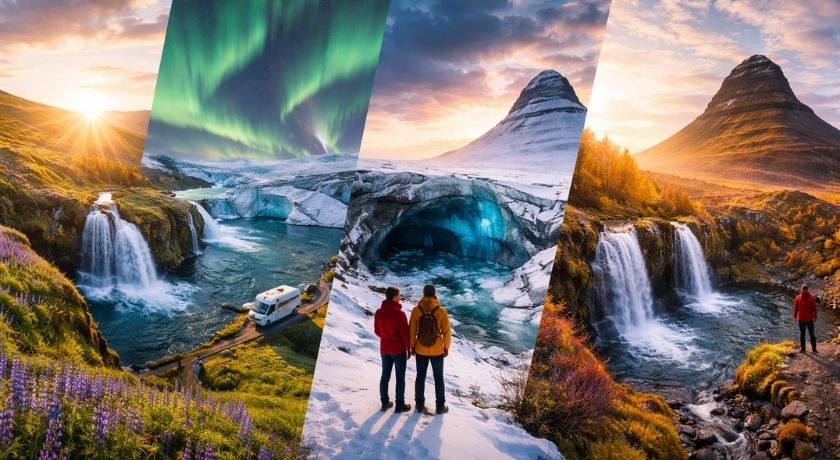
The best time to visit Iceland depends on what you want to experience. Each season offers something different, so there’s no single “perfect” time — just the right time for your type of trip.
Summer (June–August)
This is the most popular time to visit. The weather is milder, roads are easier to access, and you get long daylight hours thanks to the midnight sun. It’s ideal for road trips, hiking, and exploring the highlands.
Winter (November–March)
Winter is the best time to see the northern lights. Days are short and temperatures are colder, but you’ll experience fewer crowds and a more dramatic landscape with snow and ice. It’s also a great time for ice caves and glacier tours.
Spring and autumn (April–May, September–October)
These are great shoulder seasons with fewer tourists and lower prices. You can still see the northern lights in early autumn and enjoy improving weather in spring. It’s a balanced option if you want a mix of both worlds.
So, when should you go?
If you want long days and easy travel, choose summer. If you’re chasing the northern lights, winter is your best bet. For fewer crowds and better prices, spring or autumn are solid choices.