
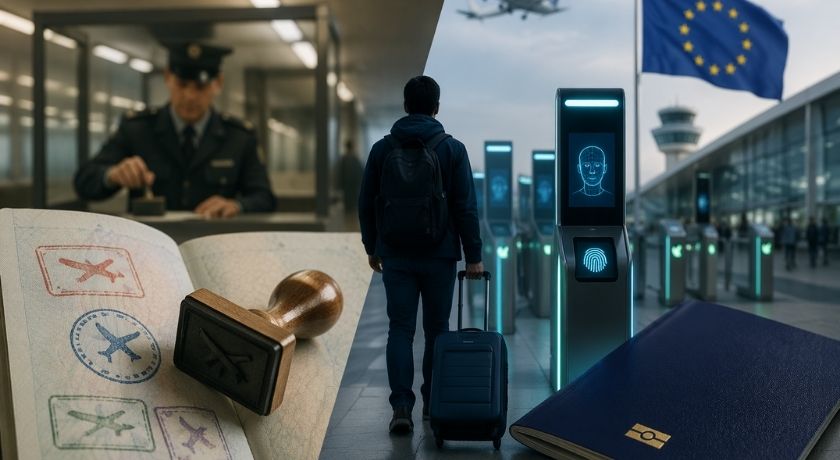
The EU has now begun phasing out the traditional passport stamp for certain travelers. Since 10 April 2026, the Entry Exit System, EES, has been fully operational in the Schengen countries, replacing the manual stamping of passports with the digital registration of entries, exits, and refused entry.
It mainly affects travelers from outside the EU
The change does not apply to everyone traveling to Europe. EES primarily covers nationals from countries outside the EU entering for a short stay, meaning up to 90 days within a 180 day period, regardless of whether they need a visa or are exempt from visa requirements. EU citizens, as well as citizens of several closely associated European countries, are not covered by the system.
Border control is becoming digital and biometric
Instead of receiving a stamp in the passport, the traveler’s details are recorded digitally in the EES. According to EU information, personal data from the travel document is collected, and a facial image and fingerprints are also taken at the border to verify identity. The system is intended to be used every time a covered traveler crosses the external border of the Schengen area.
The goal is better control and faster procedures
The EU describes the reform as a way to both strengthen security and make border crossings more efficient. Since entries and exits are stored digitally, it becomes easier to detect people who stay longer than permitted, while also giving authorities better tools to prevent identity fraud and use automated border controls.
EES should not be confused with ETIAS
Many people confuse EES with ETIAS, but they are two different systems. EES is already being used at the border to register entries and exits, while ETIAS will be a separate digital travel authorization for visa exempt travelers and, according to official EU information, is expected to start applying in the last quarter of 2026. This means that the EU’s old passport stamp is, in practice, becoming history, while travel to Europe is becoming increasingly digital.